View Conference Center Maps | Print this schedule
Monday, June 8, 2026
| Time | Session/Event Information |
|---|---|
| 11:30 AM–5:30 PM | Pre Conference Golf Whiteface Club |
| 12:00–2:00 PM |
STC Professional Development Event
Adirondack Experience Outdoors
Hosted by Experience Outdoors – Lake Placid Experience Outdoors, located just outside town, will lead you through an adventure-based challenge course where you will learn about teamwork, building trust, problem solving, and leadership. Through a combination of low and high rope elements participants will grow as a team and as individuals. Please note: You may participate in both the Pre-Conference Biathlon Activity and this Professional Development event, as their schedules do not overlap. However, if you registered for the Golf Pre-Conference Activity, you will not be able to attend this event due to the scheduling conflict. |
| 3:00–5:00 PM | Pre Conference Biathlon Mt Van Hoevenberg |
| 4:30–6:00 PM | Registration Open Edelweiss |
| 7:00–9:00 PM |
Welcome Reception
Roamer’s Cafe, Miracle Plaza, Olympic Center
Join your colleagues for great food, drink, and conversation while taking in beautiful views of Lake Placid. Music provided by Solid Groundlings, SUNY’s own jam band and the mic is open to anyone that would like to sit in on some tunes. |
Tuesday, June 9, 2026
| Time | Session/Event Information |
|---|---|
| 7:00–9:00 AM | Breakfast Lussi D |
| 7:00 AM–1:00 PM | Registration Open Edelweiss |
| 8:00–8:45 AM |
SUNY System Administration Update
Lussi A/B/C
SUNY Employees Only
Anne Bink, Senior Vice Chancellor for Operations and Management & Chief Operating Officer
Kim Scalzo, Senior Associate Provost for Digital Innovation and Academic Services Carrie Pause, Associate Chief Information Officer Kevin Stillman, Chief Technology Officer Jesse Sloman, Chief Information Security Officer All conference attendees are invited to attend this session for an update from SUNY System leaders on current priorities, shared services, and strategic initiatives. Anne Bink will discuss the direction of the Chief Operating Officer’s office and its partnership with SUNY IT across the System. Kim Scalzo will share updates from the Provost’s Office on academic priorities and academic technology initiatives that campus IT teams should be aware of. Carrie Pause will cover key Information Technology initiatives delivered by SUNY OIT, Kevin Stillman will share updates on initiatives from the Office of Chief Technology Officer, and Jesse Sloman will discuss his new role and what it means for System Office priorities ahead. |
| 8:45–9:30 AM |
SUNY DTP Update
Lussi A/B/C
SUNY Employees Only
Brian Digman, SUNY System Administration
Carrie Pause, SUNY System Administration Kevin Stillman, SUNY System Administration Kim Scalzo, SUNY System Administration SUNY’s Digital Transformation Project is one of the most ambitious technology investments in public higher education — more than 20 initiatives spanning student success, cybersecurity, and operational modernization. In this session, CIO Brian Digman and his team will provide an overview and select highlights of the DTP portfolio, including the “big picture” integration of individual initiatives and opportunities for forward-thinking campuses to capitalize on DTP’s value proposition. Exciting technology developments are creating opportunities for increased enrollments, retention, and cross-campus learning and teaching! Foundational cybersecurity deployments are already driving a 75%+ drop in intrusions. Modernized communication platforms are allowing campuses to opt-in to serious, near-term savings. Innovations like cloud-based computer labs, AI-powered tutoring and advising—and more—are all making the SUNY System increasingly competitive in challenging higher-education landscape. Big changes are coming! Learn how you can be ready to take part. |
| 9:45–10:30 AM |
COA Vision 2026 – Bringing Technology Professionals Together
Lussi A/B/C
SUNY Employees Only
Krystal Reagan, SUNY Brockport
Adam Weisblatt, SUNY Upstate Medical University Are you a SUNY or affiliated IT professional? If the answer is yes, you’ve found your people. The Computing Officer’s Association (COA) represents those who implement, support, and manage the technology systems on the 64 campuses as well as administrative and support organizations throughout SUNY. We’ve been Bringing SUNY Technology Professionals together for decades though our listserv, regional forums, mentorship program, and our partnerships with the Wizard and SUNY Technology Conferences. With about a thousand members from every corner of the state we truly represent your professional interests and want to help you succeed and grow your career. All SUNY attendees are welcome to this COA meeting. |
| 10:30–10:45 AM | Break – Light refreshments Hall of Fame Hallway |
| 10:45–11:30 AM |
TOA General Business Meeting
Gore
SUNY Employees Only
Brett Southard, Farmingdale State College
Come and meet fellow SUNY colleagues! SUNY TOA focuses on Communication and Collaboration Services, Wiring and Infrastructure, Networking, Cable TV, Emergency Notifications, and Cell Services. All SUNY attendees are welcome to this meeting. Membership is drawn from State-Operated Campuses and Community Colleges, CUNY, SUNY System Administration, State University Construction Fund, SUNY Research Foundation, DASNY, and various NY Private Colleges. |
| 10:45 AM–12:15 PM |
CCIO General Meeting
North Elba
SUNY CCIO Members Only
Steven Maniscalco, SUNY Oneonta
CCIO General Meeting This session is open to all members of the Council of CIOs only. |
| 11:30 AM–12:15 PM |
EdTOA General Business Meeting
Whiteface
SUNY Employees Only
Edward Brunet, Stony Brook University
EdTOA (Educational Technology Officers Association) members represent the classroom and media technology professionals from across SUNY. If this is your work too, please join us for our annual General Business Meeting. Meet the EdTOA Executive Board and reconnect with colleagues. We will discuss this year’s lineup of presentations and hold elections for the EdTOA Executive Board. We welcome all EdTOA members; the meeting is closed to non-SUNY employees. |
| 12:15–1:15 PM | Lunch Lussi Ballroom full Please let your server know if you’d like the vegetarian meal option. |
| 1:15–2:30 PM |
Keynote Address: Dr. Oluwaferanmi Okanlami, “I.T.’s Role in the Changing Landscape of Higher Education Accessibility”
Lussi Ballroom full
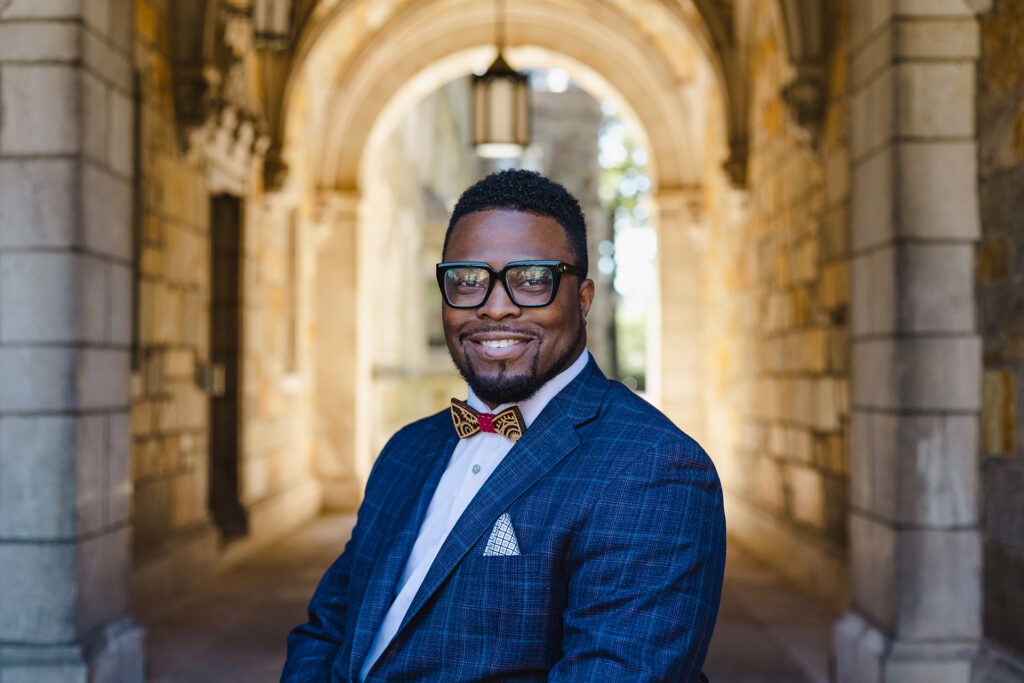
Dr. Oluwaferanmi “Dr. O” Okanlami is the Director of Student Accessibility and Accommodation Services at the University of Michigan, where he leads Services for Students with Disabilities, Testing Accommodation Centers, Academic Support and Access Partnerships, and founded the Adaptive Sports & Fitness Program. He also holds multiple faculty appointments across Medicine—including Family Medicine, Physical Medicine & Rehabilitation, Urology, and Orthopaedic Surgery—and is building a national adaptive sports medicine program through an adjunct role at UCLA in preparation for the 2028 Olympic and Paralympic Games. Dr. O joins us at the SUNY Technology Conference to discuss how the recent Title II changes to the Americans with Disabilities Act, and the shifting landscape of accessibility and accommodations, can affect the role of the Information Technology professional in Higher Education. Come learn how IT plays a vital role in the future of accessible education! |
| 2:30–4:00 PM | Registration Open Edelweiss |
| 2:30–5:00 PM |
Technology Exhibit Hall Grand Opening
1932 Jack Shea
Details TBA |
| 3:00–3:45 PM |
C.H.A.R.T.E.D / EdTOA Coffee Hour
Whiteface
SUNY Employees Only
Edward Brunet, Stony Brook University
This is our monthly virtual coffee hour, in person while at STC. Here is an open forum where we discuss what’s happening on your campus with other EdTOA members from across the SUNY campuses.
Empowering the Future of Research: A Review of Year 1 of the SUNY AI Platform
Van Hoevenberg
Catherine Stollar Peters, SUNY ORIED
Sarah Imboden, SUNY System Administration The State University of New York (SUNY) has embarked on a transformative journey to accelerate discovery and innovation in research. At the heart of this initiative is the SUNY AI Platform, a system-wide, secure, and scalable ecosystem developed in partnership with Google. This session provides an inside look at the platform’s vision, architecture, and powerful capabilities. We will explore how this strategic investment provides researchers with democratized access to cutting-edge generative AI technologies, including Gemini Enterprise, Vertex AI, and specialized tools like GrantAI. Through real-world case studies and researcher testimonials, we will showcase the platform’s impact on diverse fields such as cybersecurity, neuroscience, and public health. The session will culminate in a demonstration, showing how faculty and students can go from idea to implementation, and will outline the roadmap for future development and expansion. Learning Objectives: Attendees of this session will:
M365 Birds of a Feather
Intervale
Emmon Johnson, SUNY Oneonta
Deb McClenon, SUNY Oneonta Anything and everything M365 can be shared in this open forum. As promised in our COA M365 Collaboration Group, this is an opportunity for all participants to meet in person, share their successes, challenges, and expertise for the benefit of SUNY.
No Dark Corners: NetFlow Visibility for the Resource-Constrained Campus Network
Gore
Rick Coloccia, SUNY Geneseo
Do you know where your traffic goes? Not just “out to the internet” — but which upstream provider, through which border interface, to which autonomous system, by which user on your network? For many small and mid-sized campuses, the honest answer is: not really. This session explores how SUNY Geneseo uses NetFlow data — collected from FortiGate next-generation firewalls and analyzed through Plixer’s AI-enabled Scrutinizer platform — to achieve granular, actionable visibility into campus network traffic. With 13 active BGP peers spanning both IPv4 and IPv6, and a lean IT team, NetFlow has become an indispensable operational and security tool. Attendees will see real-world demonstrations of four core use cases:
Whether you’re responding to a legal inquiry, troubleshooting a routing anomaly, or simply trying to understand what your network is doing after hours, NetFlow data gives small teams the visibility that was once reserved for large NOC operations. This session is aimed at network and security practitioners who want practical, low-overhead approaches to traffic intelligence — no full-time SOC required.
Tenable One Update
Legacy
Tishawn Smith, SUNY System Administration
We will use this session to provide the SUNY Community with an update on Tenable One.
Welcome to the Role: Building Community and Continuity Through the SUNY CCIO Welcome Wagon
North Elba
Steven Maniscalco, SUNY Oneonta
Mary Hand, SUNY Adirondack Transitions into a Chief Information Officer role are often fast-paced, isolating, and high-stakes—particularly within a large, distributed public higher education system. To address this challenge, the SUNY Council of Chief Information Officers (CCIO) established the Welcome Wagon committee to provide structured, peer-driven onboarding and ongoing support for new and interim CIOs across the system. This panel will share the origins and evolution of the Welcome Wagon and describe how a lightweight but intentional approach to onboarding has strengthened community, accelerated knowledge sharing, and reduced friction for leaders stepping into complex roles. Panelists will discuss the development of proactive outreach strategies, and the use of existing collaboration platforms to connect new CIOs not only to information, but to people. The session will highlight lessons learned, including how the Welcome Wagon balances consistency with flexibility across diverse institutional contexts and encourages engagement from both new and experienced CIOs. Panelists will also reflect on how this work supports leadership development, continuity, and a culture of mutual support within the CCIO community. |
| 4:00–4:45 PM |
ACME – Modernizing Public Web Certificates
Gore
Sean Dansro, SUNY Morrisville
AI-Enabled Academic Innovation at SUNY
Van Hoevenberg
Kim Scalzo, SUNY System Administration
AI is being looked at across the academic enterprise at SUNY to identify opportunities for improving student success and supporting faculty innovators seeking to improve their teaching practices. At SUNY, we have provided a range of support and funding opportunities for faculty to explore AI in teaching and learning. We are also leading two Digital Transformation Project initiatives – AI Tutor and AI in Advising to consider where AI can augment the work of faculty and tutors in supporting student academic success at the course level, and where AI can be used to enhance and complement advising work across SUNY campuses. SUNY Online, the Office of Library and Information Services, and SUNY OER Services, also have AI-based initiatives to explore where AI can be leveraged by faculty and in their workflows. Attend this session to get an update on current projects and initiatives and to share what is happening on your campus in this space.
Building Trust at Scale: Institutional Chatbots in Higher Education
Whiteface
Preston Coppage, University at Albany
Institutional chatbots are becoming a common feature across higher education campuses, yet some may struggle to move beyond basic FAQ functionality or lose trust over time due to lack of direction. This session presents a practical, experience-driven framework for maintaining institutional chatbots that support both student and employee needs. Drawing on real-world implementation experience at the University at Albany, this presentation introduces three core pillars for successful chatbot programs: providing support when users need it, grounding chatbot intelligence with institutional sources, and managing chatbot services as long-term infrastructure. Attendees will explore how these pillars help reduce friction, improve access to information, and create more trustworthy digital interactions. The session emphasizes governance, content stewardship, and lifecycle management as critical success factors, offering actionable guidance for offices and campus partners seeking to adopt and deploy chatbot processes and initiatives responsibly. Participants will leave with an understanding about practical starting points that can be adapted across campus environments, regardless of size or technical maturity.
Leadership Lesson’s from Ted Lasso
North Elba
Dr. Stephen Cook, SUNY Brockport
This session will explore leadership lessons from Ted Lasso and compare them to recent IT organizational changes that have been made at SUNY Brockport. These changes were made July 1, 2025, with an alignment of IT Services across the university.
Small Teams, Shared Challenges: Why Aren’t We Solving More Together?
Legacy
Kyle Brown, Jamestown Community College
Many SUNY institutions operate with small IT teams facing expanding expectations across cybersecurity, AI, data, and enterprise systems. At the same time, recent system-wide discussions have highlighted a shared desire for greater collaboration and shared services—alongside common barriers such as limited staffing, funding constraints, and institutional culture. This birds-of-a-feather session invites participants to engage in an open, facilitated discussion about these shared challenges and opportunities. Using insights from recent SUNY conversations as a starting point, participants will explore why similar problems are often addressed independently, where collaboration has been successful, and what it would take to move toward more shared solutions. The session is designed to be interactive, with minimal presentation and a focus on peer learning and candid conversation. Learning Outcomes Participants will:
WITness the Launch: Women in Technology
Intervale
Holly Heller-Ross, SUNY Plattsburgh
Tina Rimbeck, University at Buffalo Andrew Garrity, Buffalo State University Maria Garrity, Buffalo State University Tyler Whitney, SUNY Plattsburgh Kari Costelloe, University at Buffalo Kristin Benoodt, University at Buffalo What does it take to successfully launch a Women in Technology (WIT) program that engages, inspires, and sustains momentum across a campus community? WITness the Launch shares the story behind the development of the Buffalo State WIT chapter, an initiative aligned with the broader SUNY WIT network, designed to connect individuals who use technology in their careers, promote collaboration, gender diversity, and highlight innovation across campus. This birds of a feather session will provide a behind-the-scenes look at how the program was built from the ground up, including strategies for gaining institutional support, forming an advisory committee, establishing program goals, and creating meaningful opportunities for engagement. Attendees will learn how targeted communication, campus partnerships, and event planning, such as a successful pre-launch tied to International Women’s Day, helped generate excitement and visibility. In addition, the presentation will highlight key components of the official launch event, which showcases real-world applications of technology through campus initiatives like Bengala+, Runway, procurement systems. and AI. These examples demonstrate how technology supports creativity, operations, and innovation in diverse ways across the institution. Please join us to share your WIT launch experiences and exchange ideas across SUNY campuses. Thank you. |
| 5:00–7:00 PM |
Technology Exhibitor Reception
1932 Jack Shea
Join your fellow conference attendees for the evening reception in our technology exhibit hall. Food and beverages served. Prize pulls from our featured vendors will begin at 5:30pm and will adhere to the following schedule:
|
| 7:00–9:00 PM |
Conference Dinner
Lussi Ballroom full
Join us at the conclusion of the technology exhibit for the Tuesday night dinner. Carving stations featuring surf and turf will complement a host of side dishes and cocktails as we continue our discussions of the day’s events. Our formal evening program will begin towards the end of dinner with updates from our organizations, partners, and award recipients. |
| 9:00–11:00 PM |
STC Game Night
3rd Floor Lobby – Lake Placid Conference Center
We continue the annual tradition of an STC board game night! Come and relax, have fun, and get to know your fellow SUNY folks in one of the quieter settings of the week. No experience necessary – attendees will be taught how to play any games. The host will provide some games, but please bring any of your favorites if you’re willing to teach others how to play! |
Wednesday, June 10, 2026
| Time | Session/Event Information |
|---|---|
| 7:00–8:00 AM | Coffee Service / Light Breakfast Lussi Ballroom |
| 7:30 AM–4:00 PM | Registration Open Edelweiss |
| 8:00–8:45 AM |
Banner, the Final Frontier
Van Hoevenberg
SUNY Employees Only
Bill Grau, SICAS Center
Banner and the future of Banner are the topics on everyone’s mind. Come to this session to hear an update on Banner, Ellucian, and SICAS.
From Idea to App: Building Microsoft 365 Power Apps Solutions with Copilot
Legacy
Emmon Johnson, SUNY Oneonta
Deborah McClenon, SUNY Oneonta What happens when low-code development meets generative AI? In this interactive session, we will show how to move from a real-world business problem to a working Microsoft 365 Power Apps solution using Copilot in Power Apps. Participants will help shape the session as we build a live demo application using Plans in Power Apps, a copilot-first design experience that can turn natural language prompts—and even supporting artifacts like process diagrams or screenshots—into user requirements, a Dataverse-backed data model, and recommended solution components. Those components can include canvas apps, model-driven apps, Power Automate flows, Power Pages sites, and Copilot Studio agents. Using a higher education lens, we will show how Copilot-assisted design can speed up ideation, strengthen stakeholder collaboration, and shorten the path from concept to prototype. We will also cover the practical considerations for adoption, including Dataverse and environment prerequisites, required permissions, governance, and the need for human review and refinement throughout the process. Attendees will leave with a clearer understanding of where Copilot adds value in the app design process, what a live build experience looks like, and how they can apply these techniques to their own campus solutions.
Programmer’s Birds-of-a-Feather
Intervale
DJ Broadbent, SUNY Potsdam
This Birds-of-a-Feather session invites programmers to discuss current technical challenges and compare approaches across SUNY campuses. Topics may include Banner programming, Ellucian Experience development, Argos report writing, database and SQL work, integrations, automation, and other issues raised by attendees.
Sharing Data between the Fund and Campuses
Gore
Joseph Rourke, SUNY Construction Fund
When AiM was first implemented in 2016, it replaced the Building Characteristics Inventory (BCI) as the system of record for property for SUNY. AiM also replaced the Physical Space Inventory (PSI), tracking rooms, seating capacity, how they are used and who is using them. Stop and think about how many systems at your campus have building numbers/abbreviations and room locations in them. Your scheduling application, phones, directories, and countless others are maintaining the exact same data as AiM. Come and ask questions about AiM, what information is available in it, and more importantly how you can access this data with a REST API developed by the Fund.
TeamDynamix Birds-of-a-Feather
Whiteface
Holly Waid, SUNY Delhi
Varya McCaslin-Doyle, SUNY Cortland A space to discuss TeamDynamix (TDX) topics and questions.
The ROI of Reading: Essential Books for Your Career Library
North Elba
Holly Heller-Ross, SUNY Plattsburgh
Denise Burbey, ITEC/Corning Community College We’ve all bought the “must-read” business books, but how many have changed the way you work? In this high-impact book list swap, we’re moving beyond the bestseller list to share the specific titles that provided a “lightbulb moment” for our careers. Whether it helped you master the art of the salary negotiation, dismantle imposter syndrome, or lead a team with more empathy, bring the title that gave you your biggest professional ROI or join us and hear what has helped other CIOs in their careers. You’ll leave with a list of tried-and-tested wisdom from current SUNY CIOs and a room full of mentors. |
| 9:00–9:45 AM |
Digital Guardrails: Securing the Future of AI in the SUNY System
Legacy
As SUNY institutions accelerate the adoption of generative AI—from student research and classroom innovation to the ambitious Empire AI initiative—the intersection of academic freedom and digital security has never been more critical. In this session, we will explore how SUNY campuses can securely deploy and scale AI while protecting the integrity of the academic environment. We will move beyond basic policy to address the practicalities of higher education AI governance: safeguarding faculty and student use of public AI tools, discovering “shadow AI” across campus networks, and defending proprietary research applications against prompt injection, data leakage, and content toxicity. Join us for a deep dive into how a unified visibility and control platform allows SUNY IT and academic leaders to provide real-time protection throughout the AI lifecycle without stifling the spirit of inquiry. Attendees will learn:
Join us to learn more from our expert presenter!
From Shadow AI to Secure AI: A Cohort-Based Blueprint for Building AI Literacy Across Higher Education
North Elba
Balázs Nagy, NewPush Founder
Faculty, staff, and students across higher education are already using generative AI — usually without policy, oversight, or any security framing. For IT leaders and secuirty profeccionals, the result is “shadow AI”: real productivity gains paired with real exposure on data privacy, IP, FERPA, and emerging compliance regimes like CMMC. Telling people to stop doesn’t work. Banning tools doesn’t work. The only durable answer is institutional AI literacy: turning every employee into a thoughtful, secure builder rather than a passive prompter. In this session, NewPush founder Balázs Nagy presents Project NoéMI — a cohort-based AI literacy program developed in partnership with George Mason University’s Center for Infrastructure Security in the Era of AI (ISEAI) — and shows, with a live demo, how participants go from zero to building governed AI agents in weeks. We’ll share data from the first two cohorts, map the program to Gartner’s AI literacy and higher-education AI maturity frameworks, and outline a pragmatic blueprint SUNY IT leaders and security professionals can adapt to their own institutions: how to scope a pilot, what to measure, where security and compliance fit, and how to leverage the SUNY consortium to move faster than any single campus could alone.
When Everything Is a Priority: Building Campus Technology Roadmaps That Work
Van Hoevenberg
Jessica Edmonds
Cassie Bixler Kim Namkoong Campus technology teams are navigating a rapidly expanding set of priorities, including AI, accessibility, cybersecurity, vendor risk, data governance, modernization, and evolving systemwide initiatives. Each priority brings opportunities to improve services, reduce risk, and support institutional goals, but the combined pace and complexity can make it challenging to determine where to start, how to sequence the work, and what support is needed for long-term success. The breadth of topics represented throughout the STC agenda highlights how interconnected these priorities have become across campus technology environments. This session will present a practical approach for moving from broad technology priorities to actionable campus roadmaps, drawing on NYSTEC’s experience supporting complex technology initiatives across public-sector and higher education environments. Presenters will discuss how current state assessments, gap analysis, stakeholder alignment, implementation planning, and phased roadmaps can help clarify needs, surface dependencies, identify risks, and define realistic paths forward. Attendees will gain insight into how campuses can use structured planning and targeted support to balance innovation, compliance, operational capacity, and sustainability across evolving technology initiatives.
Your Next Student May Be a Bot: AI, Identity Warfare, and the New Threat Landscape in Higher Education
Gore
Matt Singleton, Executive Strategist, CrowdStrike
The cybersecurity threat landscape for higher education has fundamentally changed. Attackers no longer rely solely on malware and phishing emails; they use AI-generated content, stolen identities, automated reconnaissance, and cloud-native attack paths to exploit the open and collaborative nature of universities. Using insights from the 2026 CrowdStrike Global Threat Report, this session breaks down the most important trends impacting colleges and universities today, including AI-enhanced attacks, research targeting, machine-speed break-out times, and the continued weaponization of identity. The discussion will also examine how modern security operations are evolving through NG-SIEM capabilities, AI-assisted investigation, and unified telemetry strategies that enable faster detection and response across sprawling academic environments. Designed for CIOs, CISOs, IT leaders, and security practitioners, this session connects global threat intelligence to the operational realities of higher education.
Zero Downtime, Zero Guesswork: How AI-Driven Networking Transforms Campus Operations
Whiteface
Seth Fiermonti, Distinguished Technologist for HPE
Connectivity powers today’s universities—from hybrid classrooms to research hubs. Discover how HPE’s AI-Native Networking Platform delivers secure, automated, and reliable networking to keep learning and innovation uninterrupted. Learn how institutions connect 50,000+ users effortlessly, cut trouble tickets by 90%, reduce onsite support by 85%, and deploy 9x faster. With Zero Trust security, intuitive AIOps, and top-tier performance, HPE helps higher education achieve more with less—while safeguarding students, faculty, and research.
Zoom STC Presentation
Intervale
Mike Harttree, UCaaS Advisor, Zoom Phone Upmarket Americas
Join Zoom for a special presentation for SUNY Technology Conference Attendees. |
| 9:00 AM–12:00 PM |
Wednesday Morning Tech Exhibit
1932 Jack Shea
Join us for our special Wednesday morning tech exhibit featuring our Silver Booth Brunch! Enjoy brunch food and mimosas from 9–10:30 AM on the tech floor. |
| 10:00–10:45 AM |
Driving SUNY’s Digital Transformation with Oracle Multicloud Solutions
North Elba
Sophia Gilbakis, Director, Strategic Markets Sales, Mythics
The State University of New York (SUNY) system operates at significant scale across diverse campuses and missions. As SUNY modernizes its IT environment, a flexible, secure cloud strategy is essential to support innovation, efficiency, and collaboration. In this session, attendees will learn how Oracle Cloud Infrastructure (OCI), combined with strategic multicloud integrations, enables SUNY campuses to run mission-critical workloads—such as student information systems (SIS), ERP, HR, and research platforms—with enhanced performance and interoperability. We will highlight how a multicloud approach allows SUNY to leverage existing investments while integrating with leading hyperscale providers, supporting a more open, flexible, and future-ready architecture. The session will also examine key priorities for SUNY, including data sharing across campuses, advancing research computing, improving student and faculty experiences, and maintaining compliance with evolving regulatory standards. Learn how Oracle’s distributed cloud and multicloud capabilities help address these challenges by enabling secure data access, high-performance database services, and seamless workload portability. Through practical examples and strategic insights, this session will provide you with actionable guidance to reduce complexity, optimize costs, and build a resilient digital foundation. Discover how Oracle Multicloud can empower SUNY to deliver system-wide innovation while supporting the unique needs of each campus community.
Better Together: How 16 SUNY Campuses Are Winning at Security — And What Their Teams Actually Say About It
Whiteface
Jeremy Fass
Nick Christine Sixteen SUNY campuses are doing something right. This session is about finding out exactly what that is — in their own words. Any vendor can sell you a platform. Not every partner shows up at 2am. With 16 campuses already live on Guardian Select, Forsyte has become something most institutions rarely find in a vendor: a genuine extension of their team — one that knows their environment, anticipates their needs, and goes well beyond the ticket when it matters most. This roundtable brings those campus voices together in one room. No polished case studies. No vendor narrative. Just security professionals from your peer institutions telling you what they wish they’d known sooner — and what’s made the difference. You’ll hear directly from your peers on:
The technology matters. But in higher education — with constrained teams, growing threat surfaces, and no margin for error — it’s the people behind the platform that determine whether security actually works. Come hear what’s working across the SUNY community — and take something back to your campus. Facilitated by Forsyte | An open discussion for the SUNY security community
From Lab to Laptop: Insights on AI and LLM Workloads on Apple Silicon
Gore
Lewis Bean
Insight Public Sector, in partnership with the Apple Higher Education team, invites you to explore how Apple Silicon is transforming AI and research computing on campus. Artificial intelligence and machine learning are reshaping research workflows, and institutions are rapidly expanding access to AI-capable endpoints. With Apple Silicon, every Mac includes a dedicated Neural Engine that accelerates AI and ML workloads while maintaining strong security and privacy. From running large language models locally to integrating with secure, cloud-based services, Apple Silicon offers a powerful, energy‑efficient platform for faculty, students, and research staff. In this session, you will:
You’ll leave with practical ideas for how Macs can support AI‑enhanced teaching and research, leveraging built‑in macOS features, a growing third‑party app ecosystem, and optimized hardware designed for AI workloads.
Howard Technology Solutions and Professional Services
Intervale
Travis Powers
Tyler Davis At Howard Technology Solutions, we understand that managing a campus ecosystem requires more than just hardware—it requires a partner who handles the heavy lifting of procurement and deployment. My goal is to introduce you to the “Howard Advantage,” a unique blend of our own high-performance manufactured products and strategic partnerships with industry leaders like Lenovo, HP, and Microsoft. Whether you are looking to scale virtualization and cybersecurity, upgrade interactive lecture halls, or build out an eSports program, we provide a single point of contact for the entire technical lifecycle. Supported by over 500 in-house engineers and 24/7 US-based technical support, we don’t just sell technology; we design, install, and manage it to ensure your infrastructure is future-proof and secure. I look forward to showing you how our hands-on approach can simplify your IT challenges and provide the reliable, end-to-end support your institution needs.
Running AI on Intel CPUs Using Advanced Matrix Extensions (AMX)
Legacy
John Haag
Intel® Advanced Matrix Extensions (Intel® AMX) is a built-in AI accelerator integrated into every core of 4th, 5th, and 6th Generation Intel® Xeon® Scalable processors (and Intel® Xeon® 6 with P-cores). This presentation explores how AMX delivers massive performance gains for deep learning training and inference directly on general-purpose CPUs — without requiring discrete GPUs. Attendees will learn the architecture of AMX (including 2D tile registers and the Tile Matrix Multiplication unit), supported data types (INT8 and BF16), and how it dramatically accelerates matrix operations central to AI workloads such as natural language processing (NLP), recommendation systems, image recognition, and large language model (LLM) inference. Real-world benchmarks show up to 8–16× more operations per cycle compared to prior AVX-512 implementations, with real-time inference improvements of 2–10× (and higher performance-per-watt) versus previous-generation Xeon processors and competitive platforms. The session covers practical enablement using libraries like oneDNN, OpenVINO, and frameworks such as TensorFlow and PyTorch, along with optimization best practices, TCO benefits, and deployment scenarios in on-premises, virtualized (e.g., VMware), and cloud environments. Ideal for organizations seeking cost-effective, scalable CPU-based AI without GPU dependency.
What SUNY Campuses Are Getting from Nysernet (That You Might Not Be)
Van Hoevenberg
Emilyann Fogarty, Nysernet’s CISO
Rebecca Werner, Nysernet’s Director of Membership Some SUNY campuses are getting far more out of Nysernet than just connectivity—are you one of them? Join Rebecca Werner, Director of Membership, and Emilyann Fogarty, CISO, for a candid look at how institutions are actively leveraging Nysernet services to expand capabilities, reduce costs, and support their teams. From shared services and strategic partnerships to professional development and collaboration opportunities, we’ll highlight how members are turning participation into real operational and institutional value. You’ll leave with concrete ideas you can apply immediately—whether you’re looking to do more with existing resources or explore new opportunities within the consortium. As an added bonus, one session attendee will receive a professional development course credit valued at $1,000, powered by StormWind Studios. |
| 11:00–11:45 AM |
From Data Chaos to Campus Intelligence: Transforming Higher Education with Informatica Data Quality & Governance
North Elba
Dan Rezac, Informatica
Your campus runs on data — but do you trust it? Across SUNY institutions, critical student, faculty, and operational data lives in a complex web of disconnected systems. When that data is siloed and inconsistent, the consequences are real: inaccurate reporting, compliance risk, and missed student intervention opportunities. As institutions look toward AI-powered tools and larger modernization initiatives, one truth is unavoidable—you cannot build trusted AI on untrusted data. In this session, learn how Informatica’s Intelligent Data Management Cloud (IDMC) can unify, cleanse, and govern data across your entire campus ecosystem — laying the foundation for data-driven decision-making, confident AI adoption, and the larger digital transformation initiatives on your roadmap. Key Takeaways
Better Together: How 5 SUNY Campuses Are Strengthening Identity Security — And What They’ve Learned
Whiteface
John Mollicone
Five SUNY campuses are taking a focused approach to one of the most critical — and often overlooked — parts of the higher ed environment: identity. Active Directory and Entra ID sit at the center of nearly every cyber incident. In partnership with Forsyte and integrated into their managed security services, these campuses are working to protect and recover their identity infrastructure without adding strain to already lean teams. This session brings those experiences into the room. No polished case studies. No vendor pitch. Just real-world perspectives from campuses and practitioners who are making identity security operational. You’ll hear about:
Join this session to hear what’s working — and what lessons you can take back to your campus.
Build It Yourself: AI-Powered Development Tools — Not Just for Developers
Van Hoevenberg
Forest Penland, AWS Sr. Solutions Architect / Justin Washington – AWS Enterprise Account Executive
AI-powered development tools like AWS’s Kiro are built for software engineers — and they’re remarkable for that work. But the same capabilities are just as powerful for an IT operations engineer drafting automation, a security analyst investigating log anomalies, a finance lead building cost-analysis dashboards, or any individual contributor automating the routine work that fills their calendar. Beyond IT, faculty and students are using the same tool to prototype classroom activities, build custom research utilities, and automate the administrative work that competes with teaching and learning. This session shows Kiro in action on problems that look nothing like traditional software development — across IT operations, security, cost analysis, and everyday productivity — including a central IT engineer at SUNY who’s built a custom network-analysis and firewall-troubleshooting tools, and a look at how a SUNY ITEC team used Kiro to deploy a production accessibility remediation solution with no prior AWS development experience — a capstone proof point for what higher-ed IT can do with a capable AI agent. Attendees leave with a concrete mental model for spec-driven AI work, practical first-next-steps for trying Kiro, and a framework for finding their highest-leverage opportunity no matter their role or experience.
Building An Accessible LMS Ecosystem
Intervale
Ravish Khanna, YuJa Inc
Creating an accessible digital learning environment requires more than compliance, it demands campus-wide commitment. This session explores how institutions leverage YuJa’s ecosystem to advance collaboration through accessibility and technology. Learn how to empower faculty to remediate common barriers, such as document issues and contrast while reducing the manual effort of traditional compliance.
From Backups to Breach Readiness: DSPM for Higher Ed
Gore
Christian Latoja
Higher education environments are uniquely complex: decentralized IT, diverse research data, SaaS sprawl, and turnover create blind spots where sensitive data can proliferate unnoticed. Data Security Posture Management (DSPM) addresses this challenge by continuously discovering where sensitive data lives across cloud and on‑prem systems, mapping who can access it, and highlighting exposure paths that matter most—before they become incidents. In this session, we’ll translate DSPM from buzzword to practical program for SUNY schools. We’ll cover a pragmatic lifecycle—discover, classify, prioritize, remediate, and continuously monitor—and show how to align DSPM outcomes to common higher‑ed drivers like FERPA, HIPAA, GLBA, research obligations, and ransomware preparedness
Inside the Ransomware Attack Chain: How Modern Attacks Unfold and How to Stop Them
Legacy
Patrick Orzechowski, Director of Field Engineering, QnA Tech
Ransomware isn’t just encryption with a ransom note; it’s a full-spectrum intrusion that most organizations don’t truly understand until they’re staring at one. This talk pulls back the curtain on the modern ransomware attack chain, walking through the real technical stages from initial access and credential harvesting through lateral movement, defense evasion, data exfiltration, and the encryption event itself. Drawing on years of red team operations and hands-on ransomware incident response, we will break down the tools, techniques, and procedures (TTPs) that ransomware operators actually use in the wild. Learn how Halcyon uses a multi-layered, AI-driven approach that focuses on preventing execution, detecting, and mitigating attacks at every stage—pre-execution, during the attack, and post-compromise. |
| 11:30 AM–12:30 PM | Lunch Lussi Ballroom full |
| 1:00–1:45 PM |
Building Secure Teams File Shares at SUNY Brockport: A Practical Zero Trust Approach
Legacy
Shawn Maher, SUNY Brockport
At SUNY Brockport, we needed a way to give departments secure access to sensitive files in Microsoft Teams, without relying on shared network drives, shared accounts, or hoping people would follow best practices on their own. This session walks through how we built it using our A5 M365 licensing, including: sensitivity labels on Teams and SharePoint that enforce Conditional Access policies, requiring compliant Intune-managed devices with up-to-date Defender, data encryption, and phishing-resistant MFA through Windows Hello/Passkeys. We’ll cover the technical configuration, from device compliance policies and sensitivity label setup to blocking access from unmanaged devices or high risk users, as well as the practical side.
Institutional Success: SUNY Oneonta’s University AI Advisory Taskforce
North Elba
Ryan Swan, SUNY Oneonta
Steven Maniscalco, SUNY Oneonta Many might prefer to bury their heads in the sand and hope that artificial intelligence is just a passing storm. But the reality is clear: AI is reshaping higher education whether we’re ready or not. At SUNY Oneonta, we’ve chosen to meet this moment head on. Instead of resisting the disruption, we are harnessing it—mobilizing our campus community to actively build the future we want with AI rather than letting it happen to us. This presentation pulls back the curtain on the macro and micro politics of leading institution wide change. We will share the strategies, missteps, insights, and breakthroughs that shaped our approach, along with the methodology that helped us construct a strong, community driven foundation for an AI roadmap that truly reflects our campus values. Together, we’ll explore our challenges, celebrate our successes, imagine what’s possible next, and learn from one another as we navigate this rapidly evolving landscape.
ITEC Update
Van Hoevenberg
Bill Kramp, SUNY ITEC
Don Erwin, SUNY ITEC Joseph Hoot, SUNY ITEC Mike Notarius, SUNY ITEC ITEC continues to be the premier choice for SUNY campuses seeking expert assistance in navigating the complexities of the digital landscape. We continue to evolve as a trusted technology partner for SUNY campuses, further expanding services and strengthening our operational excellence over the past year. This session offers a focused update on key initiatives across infrastructure, security, service management, resource management, and project delivery—highlighting how these efforts enhance stability, efficiency, and support for campus needs. Join us for an overview of our progress, the impact of our ongoing evolution, and a look ahead at how ITEC will continue empowering campuses across our SUNY Family in an increasingly complex digital landscape.
Leveraging CrossLink, Remediation Server, and EMMA to Automate Accessibility Workflows
Intervale
Mark Sullivan, SUNY Geneseo/IDS Network
Managing accessible resources at scale is one of the most persistent operational challenges facing higher education IT teams today. This session explores how IDS Network has brought together three powerful tools: CrossLink, Remediation Server, and EMMA to build a cohesive, automated accessibility workflow that reduces manual effort, accelerates document remediation, and ensures equitable access to shared resources across the institution. CrossLink, developed by IDS Network at SUNY Geneseo, facilitates resource sharing across campuses and systems, enabling institutions to efficiently distribute and access shared content, services, and materials. The AWS Remediation Server complements this by automating the conversion of inaccessible documents into ADA-compliant formats at scale, freeing IT and disability services staff from time-consuming manual remediation. EMMA (Educational Materials Made Accessible), now transitioning to IDS Network at SUNY Geneseo, rounds out the ecosystem by enabling DSO and library staff to share and access remediated educational materials across institutions, eliminating redundant effort system-wide. We will walk through implementation decisions, technical configurations, and measurable outcomes including reduced remediation turnaround times and improved consistency in accessible content delivery. Attendees will leave with a replicable framework for building an integrated, automated accessibility workflow at their own institutions.
Outfitting a Building with AVoIP
Whiteface
Chuck Perkins, SUNY Oswego
Matthew Michaelis, SUNY Oswego Discuss how we designed and implemented AVoIP in a newly renovated building.
Teams Telephony Configuration: 36 and 3/4 Easy Steps to Get You started
Gore
Michael da Cunha, SUNY Delhi
This presentation provides a practical, experience-driven overview of configuring Microsoft Teams Telephony in an enterprise higher‑education environment. It walks through the end‑to‑end architecture used at SUNY Delhi, covering tenant‑level configuration, security group design, voice and emergency policies, and real‑world call flow implementation. Topics include Direct Routing with SBC/SBA redundancy, dial plans and routing rules, Auto Attendants, Call Queues, Shared Calling, and dynamic e911 using Location Information Services. The session emphasizes how Microsoft 365 security groups are leveraged consistently across Teams Admin Center, Entra ID, and Intune to simplify policy assignment, user onboarding, and device compliance. Multiple call flow diagrams demonstrate how departmental structures translate into scalable, resilient voice solutions, including callback behavior, overflow handling, and after‑hours routing. Rather than a prescriptive “best practice” guide, this talk focuses on lessons learned, design tradeoffs, and tested configurations from a working production environment. It is intended for IT professionals who are new to Teams Phone or looking to better understand how its many components fit together in practice. |
| 2:00–2:45 PM |
Birds-of-a-Feather: Teams Calling
Gore
John Davis, SUNY Cobleskill
Ben Patrick, SUNY Cortland John Green, SUNY System Administration Michael da Cunha, SUNY Delhi Chad Hisert, SUNY Cobleskill This Birds of a Feather session on Teams Calling brings together SUNY professionals to share experiences, challenges, and best practices around implementation and management of Microsoft Teams Calling. The discussion will be informal and collaborative, offering an opportunity to exchange ideas, explore solutions, and identify common goals across campuses. Whether you’re fully deployed or just getting started, all perspectives are welcome.
Building Better Integrations: A Birds of a Feather Session for TDX iPaaS Developers
Intervale
Amanda X, SUNY Cortland
Jim Lucas, SUNY Plattsburgh This session brings together TDX iPaaS developers from across SUNY for an open, collaborative discussion on how campuses are implementing flows, forms, connectors, and more. Participants will share real‑world use cases, compare approaches, and discuss practical lessons learned while designing and supporting integrations. The session will follow an open Q&A format where attendees can raise challenges, highlight effective methods, and explore best practices that improve data reliability, system maintainability, and institutional efficiency. Whether you’re expanding existing automations, establishing new integration strategies, or just curious what TDX iPaaS may be able to offer your campus, this session provides an opportunity to learn from peers and gain insight into how iPaaS is evolving across the SUNY system.
IAMBing: Four Years of Identity Evolution at Binghamton University
Legacy
Tim Cortesi, Binghamton University
In 2022, Binghamton University launched IAMBing, a custom-built open source Identity and Access Management (IAM) system developed after two unsuccessful vendor implementations. Confronted with a complex landscape of unmanaged and improperly provisioned accounts, we created a solution centered on automated account lifecycles and precise entitlement management. Now, four years later in 2026, IAMBing has evolved from its initial launch into a mature, real-time integrated platform. This presentation traces our journey from go-live to a robust ecosystem that provisions accounts across more than 20 systems and manages nearly 300 unique entitlements. We’ll share how we successfully decoupled Google accounts from Active Directory, delivering a true “Single Pane of Glass” for our helpdesk while supporting over 100,000 active accounts. Along the way, we’ll discuss hard-learned lessons — from mass deletion notifications triggered by flawed HR data feeds to managing feedback (angry emails) during policy enforcement. Additionally, we’ll show how our IAM system is helping us escape “Systems Integration Hell” by serving as a central data hub. We’ll also explore the possibilities of a future “Banner SaaS” environment and its potential implications for IAM at Binghamton. Attendees will gain practical insights into institutional governance, the importance of trusting Systems of Record, and the value of automated lifecycle management — even when it meets resistance.
AI Innovation at Cornell
Whiteface
Fermin Romero, Cornell University
Join Fermin Romero formerly of SUNY Broome as he gives an update as to what he’s doing at Cornell. When ChatGPT launched, Cornell faced the same challenge every university did: individual departments spinning up ungoverned AI accounts with no cost controls, no observability, and no data protection. Instead of creating a centralized AI team that would become a bottleneck, Cornell asked a different question: what if we gave everyone the tools to build their own AI solutions? This session provides a high level overview of how Cornell built a centralized AI platform on AWS consisting of three components: an AI Gateway (LiteLLM) on Amazon Bedrock for governed model access, an Agent Studio (N8N) for low code workflow automation, and a sandbox chat environment (LibraChat) for safe experimentation.
SUNY CTO & CISO Cyber Update
Van Hoevenberg
Kevin Stillman, SUNY System Administration
Jesse Sloman, SUNY System Administration Kevin Stillman and Jesse Sloman will share a SUNY-wide update on DTP-related and broader cybersecurity initiatives highlighting shared capability progress (e.g., Security operations and vulnerability management themes) and emerging AI & identity/fraud considerations, a review of SUNY/NYS policy and guidance updates shaping campus priorities, including governance alignment references (Policy 6900).
The Good, The Bad, and The One-on-One: Mastering the Art of the Individual Meeting
North Elba
Dawn Bookhout, SICAS Center
TJ Myers, SUNY Plattsburgh Mary Hand, SUNY Adirondack Dr. Stephen Cook, SUNY Brockport One-on-one meetings are the heartbeat of effective leadership, yet they are often the most undervalued and underutilized hours on a CIO’s calendar. In this candid panel discussion, IT leaders from across the SUNY system pull back the curtain on the individual meeting. From high-impact coaching techniques to the common pitfalls that lead to “meeting fatigue,” our panelists share real-world experiences on what works, what fails, and how to transform a standard check-in into a catalyst for team performance. |
| 2:45–3:00 PM | Break – Light refreshments Hall of Fame Hallway |
| 3:00–3:45 PM |
AI in Practice Across SUNY: Local Innovation vs System-Wide Strategy
North Elba
Kyle Brown, Jamestown Community College
As SUNY campuses move rapidly from AI experimentation to institutional adoption, approaches vary widely. Some institutions are forming task forces and developing governance frameworks, while others are piloting tools and identifying use cases across academic and operational areas. At the same time, there is growing interest in shared services and system-wide alignment—raising important questions about where consistency across SUNY makes sense and where local flexibility is essential. This panel brings together technology leaders from multiple SUNY campuses to discuss how they are organizing AI efforts, developing policy and governance, and identifying meaningful use cases. Panelists will share practical experiences, including successes, challenges, and lessons learned, while also exploring the balance between local innovation and broader system alignment.
Beyond 5 GHz: Understanding the Impact of 6 GHz on Wi-Fi Design
Gore
Brett Southard, Farmingdale State College
6GHz Wi-Fi (utilized by Wi-Fi 6E and Wi-Fi 7) provides a massive, uncongested, “superhighway” for data, offering exceptionally fast speeds, significantly lower latency, and higher capacity for devices. This session will introduce you to the 6GHz spectrum and whether it be a replacement, complement or something else.
Birds-of-a-Feather: HECVAT And VPAT Collection and Analysis Methods
Intervale
Ward Andres, SUNY Oswego
Cloud vendor analysis and Title II requirements have increased the workload in the day-to-day procurement pipeline. As work continues towards maintaining compliance with the collection and analysis of HECVAT and VPAT documents, new workflows and methods must be developed to increase efficiency and keep procurement moving. Please join us at this birds-of-a-feather session to discuss with your colleagues your methods for handling these documents or learn how to get started on the journey to compliance!
SUNY ASAP | ACE Data Integration Project Panel Discussion
Van Hoevenberg
SUNY Employees Only
Douglas Kahn, SUNY System Administration
Ed Champ, Suffolk Community College Ronda Curtis, SUNY Canton Rishi Kotadiya, SUNY Canton Sheila Sicilia, SUNY Oswego Join your peers at a panel discussion where a brief overview of the project goals and progress is shared, and a panel of SUNY technologists give highlights from their work on the project. In addition, plenty of time will be devoted to Q&A. SUNY peers from any institution may attend regardless of their participation in the ASAP or ACE programs.
SUNY Cortland Assisted Listening Presentation
Whiteface
Dan Caruso, SUNY Cortland
Tim Moes, SUNY Cortland Our follow-up presentation will highlight the continued expansion of the Assisted Listening Project in partnership with the SUNY Cortland Disabilities Resources Office. Since our last conference presentation at STC in June 2025 we have installed an additional 31 microphones, 16 in Summer 2025 and 15 for Spring 2026, bringing the total to 51 microphones across 50 classrooms. With this progress, we have reached nearly 50% of our applicable instructional spaces. In addition to expanding hardware deployment, we are rolling out the server-based versions of Sennheiser Control Cockpit and MobileConnect Manager. We have also upgraded our Dante Domain Manager to support 20 domains, improving scalability, security, and system management. The installation process includes network configuration, device synchronization, and strategic microphone placement to ensure clear and consistent audio pickup. Each classroom is equipped with a Sennheiser TCCM microphone utilizing beamforming technology. Audio is transmitted via Dante to MobileConnect units housed in our Master Control Center. Dante Domain Manager and Dante Controller manage audio distribution, while Sennheiser Control Cockpit provides centralized configuration and monitoring. We are also evaluating Sennheiser’s DeviceHub cloud-based monitoring platform to help with monitoring the mics and any additional Sennheiser devices on our campus.
SUNY Research Connect: The Power and Potential of Shared Research Infrastructure
Legacy
Catherine Stollar Peters, SUNY ORIED
Drew Wallsh, SUNY ORIED Al Gallucci, SUNY ORIED This session will present an overview of the newly launched SUNY Research Connect, a comprehensive and accessible portal that empowers discovery, collaboration, and innovation among researchers within SUNY and beyond. SUNY Research Connect, a Digital Transformation Project initiative, shines a spotlight on systemwide research and aggregates expert researcher profiles from 26 campuses, including campuses administering their own branded portals (University at Buffalo, Stony Brook University, and Upstate Medical University) and NY Creates. It is a single portal with information about nearly 7,000 active SUNY researchers and their work – including publications, research projects and funding – all in one place. The platform also collects research equipment profiles to expand information about and access to robust, cutting-edge research infrastructure used and available on SUNY campuses. Discussion of multi-campus and System Administration collaboration and planning during the project will inform future efforts for shared infrastructure development. A live demonstration will guide you through the public portal, showcasing how to effectively search for experts, publications, active grants, and shared equipment across the 26 participating campuses. Learning Objectives Upon completion of this session, attendees will be able to articulate the strategic role research infrastructure, including SUNY Research Connect and a Research Data Repository, in advancing SUNY’s research. |
| 4:00–4:45 PM |
Are You Ready for Title II?
Van Hoevenberg
Kim Scalzo, SUNY System Administration
With the Title II changes to the Americans with Disabilities Act in effect as of April 24, 2026, SUNY System Administration and SUNY campuses have been working hard to prepare faculty, staff and students to improve accessibility practices to ensure compliance. SUNY campuses and System Administration have been working hard to meet these new requirements and System Administration has provided a range of supports to campuses. In Spring 2026, SUNY System Admin allocated more than $550K in grants to campuses to support this work, hosted a discipline-specific event to support faculty efforts, administered a survey to assess where each campus stood relative to the new requirements and to help campuses prioritize their efforts in the last few months leading up to the deadline. Attend this session for an update on System level supports and how the EIT Accessibility grant funds are being used. The presenters will also share what we learned from the compliance survey and celebrate the incredible amount of work being done across the system to build a culture of accessibility and inclusivity for the SUNY community. Attendees are invited to share what they are doing on their own campuses.
ITEC Security Update
Legacy
Bill Kramp, SUNY ITEC
Thomas Pearson, SUNY ITEC Travis Kench, SUNY ITEC In this session ITEC will describe the current and future security initiatives for both the “Internal Security” and “External Security” service. We will explain the new ISO positions within the Security Program that are supporting these internal and external services. We will also explain what ITEC is doing to keep hosted campus data secure, and how they can help campuses with their security services.
PhaaSinating Lessons from Dutchess Community College: Leading Through Speed, Scale, and Sophistication
Intervale
Joseph Falcone, Dutchess Community College
This session looks back on a historic campus‑wide phishing incident that tested the limits of a community college’s cybersecurity capacity. Despite the unprecedented scale and institution‑wide impact, the response and coordination effort rested largely on a single cybersecurity role. The incident became a catalyst for rethinking incident ownership, communication, and resourcing, while moving toward a multi‑person, institutionally owned response and notification model.
SUNY Construction Fund Update
Gore
Joseph Rourke, SUNY Construction Fund
The Construction Fund has one client – SUNY. New York State and the State University Construction Fund have helped build SUNY campuses where none existed before, and transformed existing State campuses into the largest and most comprehensive state university system in the nation. We have built – and rebuilt – SUNY facilities from the ground up, outstanding facilities that are used and enjoyed by countless students, faculty, staff, and surrounding communities across New York. This includes the technology cabling and systems in these building.
The Art of Asking: Designing Project Management Approaches That Work
North Elba
Kari Costelloe, University at Buffalo
Proper planning prevents preposterous problems. Say that three times fast, then stick around for this session. Project managers, both seasoned and new, will walk away with a toolkit designed to get teams talking (and agreeing) about the stuff that can either derail a project or ensure its success. This session offers a practical framework for tailoring projects through guided, open-ended discussions with their teams. The presentation walks through essential questions teams should answer together before work begins: how they will collaborate, communicate, document decisions, deliver updates, track progress, monitor project health, and define a clear exit strategy. Attendees will also learn how to facilitate these conversations effectively, from structuring prework and running the live session to capturing decisions and integrating them into the project plan. Participants will leave with a ready-to-use question set and facilitation tips they can apply immediately, helping their teams align early and prevent avoidable problems down the road.
Transitioning from Panopto to Microsoft Clipchamp and Teams
Whiteface
Dr. T. John McCune, SUNY Fredonia
Christopher Taverna, SUNY Fredonia After many years of relying on Panopto, SUNY Fredonia began a campus‑wide transition to Microsoft Clipchamp and Teams. Throughout this process, the team evaluated multiple migration strategies, identified key challenges, and uncovered valuable lessons that can benefit other SUNY campuses. This session will walk you through Fredonia’s decision‑making approach, the technical and training considerations involved, and the practical outcomes of the transition. Join us to learn what worked, what didn’t, and how to determine whether Microsoft’s video and collaboration tools may be the right fit for your campus. |
| 6:00–10:00 PM |
Conference Event
Mt. Van Hoevenberg
Van Hoevenberg awaits! Join your STC colleagues at the Mt. Van Hoevenberg Olympic Sports Complex on Wednesday night for spooky fun including the rock-climbing wall, fire pits, outdoor seating, outdoor lawn games, a photo booth and maybe even a surprise visit from actual Olympic athletes! Bus pick up begins at the following sites only at 5:45 PM:
There will be multiple trips. If you miss the first pickup, the buses will circle back. |
Thursday, June 11, 2026
| Time | Session/Event Information |
|---|---|
| 7:30–9:15 AM | Breakfast Lussi D |
| 7:30–10:00 AM | Registration Open Edelweiss |
| 8:15–9:00 AM |
Digital Accessibility Considerations for Argos Developers
Intervale
Sheila Sicilia, SUNY Oswego
Brian Mead, SICAS Center As SUNY campuses have been working toward compliance with Title II of the Americans with Disabilities Act regarding Digital Accessibility, public-facing materials and applications have been first priority. Since Title II also applies to our internal materials and applications, we need to take a look at accessibility best practices for Evisions Argos DataBlocks and reports. This session will cover accessibility best practices for new development, and also explore remediation ideas for existing DataBlocks/reports.
Firewall Fast-Track: Migrating an Ecosystem in Months, Not Years
Gore
Scott Hoeppner, Binghamton University
Joe Roth, Binghamton University This session will cover the fast-tracked migration of around 300 servers behind a segmented data center firewall at Binghamton University. The devil was in the details, with good planning and communication being paramount to the success of the project. Topics will include some of the following:
IAM Collaboration Group Birds-of-a-Feather
Whiteface
Paul Chauvet, SUNY New Paltz
Jack Truckenmiller, SUNY Geneseo The COA Identity & Access Management collaboration group invites you to join us for an in person conversation at STC! If you do anything related to user provisioning and deprovisioning, authentication and access control, MFA, or any other aspect that involves getting users access to what they need (and not more), we’d love to have you join us.
Key Factors for the Success or Failure of AI Projects
North Elba
Dilip Nath, Downstate Health Sciences University
Artificial intelligence projects are changing the face of industries, changing the way complex problems are addressed. But not all AI initiatives reach their intended ends. According to a Gartner report, 87 percent of AI projects fall short of expectations, often as a result of bad planning, overhyped messages, unrealistic expectations and misaligned objectives. Additional evidence comes from a McKinsey study indicating that only 22 per cent of companies using AI have managed to cut significant bottom line cost. In this session we will examine what it takes, and what goes wrong, for AI projects to succeed or fail, and how we can help organizations realize the transformational benefits of AI.
SUNY Online & The DLE
Van Hoevenberg
Harry Cargile, SUNY Online
Dan Feinberg, SUNY Online Steve Race, SUNY Online Attend this session to receive technology updates from the past last year on accomplishments, evolution, and future plans from SUNY Online and the DLE. We will reserve time at the end of the session to field and address questions on what has happened, why/how decisions were made, clarifying current state, and forecasting future direction. Please note any discussions that are SUNY restricted or are not appropriate for open discussion will need to be handled individually.
TDX Ipaas – AD Account Cleanup & HR-Driven Automation
Legacy
Mark Crosby, SUNY Cobleskill
As part of our ongoing implementation of TeamDynamix iPaaS for automated account lifecycle management, previous sessions have focused on account creation and update workflows. This presentation completes the lifecycle by examining the often-overlooked phase of account cleanup, including deactivation, deletion, and long-term data stewardship. Attendees will gain insight into how these processes are designed and implemented within TeamDynamix iPaaS to ensure timely removal of access, reduce security risk, and maintain alignment with institutional policies and regulatory requirements. In addition, this session highlights the critical role of Human Resources (HR) as a primary driver of lifecycle events and a key partner in shaping effective processes. We will explore how HR data informs automation triggers and how close collaboration between HR and IT has led to more consistent, accurate, and auditable workflows. By sharing our approach, challenges, and lessons learned, this presentation provides a practical model for institutions seeking to mature their identity and access management practices through cross-functional governance and automation. |
| 9:15–10:00 AM |
Large Scale In-House AV Integration: Buffalo State’s Elms Hall Project
Whiteface
Chris Weber, SUNY Buffalo State
A look into the process of integrating AV into 33 brand new learning spaces at Buffalo State. The design, programming, and installation is being handled entirely by Buffalo State staff instead of a commercial integrator. Session will talk about the “bumps in the road” and the process of evaluating/ deciding on new directions required in design. Intended to be the first of a two-part presentation (coming after project completion in 2027) with the second part covering installation/ commissioning/ user support/ lessons learned.
Diary of a Phishing Attack
Legacy
Brett Southard, Farmingdale State College
Kyle Gladkowski, Farmingdale State College In late January of 2026, a few days away from the start of the Spring Semester, Farmingdale State College experienced an unusually active Phishing Campaign targeting our student population. The presentation covers the initial brief highlights to intro the audience to overall dynamics that were involved during the Phishing Campaign. The presentation then begins to breakdown the core elements encountered by FSC IT, the students perspective (as recipients of being targeted), systems involved / affected, analysis work involved to investigate the event, and actions taken to both notify and remediate the situation.
Modern Endpoint Management in Higher Education with Microsoft Intune
Intervale
Tyler Billings, SUNY ITEC
Higher education institutions face unique challenges in managing a diverse and distributed device landscape that includes faculty, staff, students, personally owned devices, and shared labs. This session explores how Microsoft Intune can be used as a unified endpoint management platform to address these challenges while supporting security, flexibility, and academic autonomy. Attendees will learn how Intune is being leveraged in a higher‑ed environment to manage Windows, macOS, iOS, and Android devices at scale, including enrollment strategies for institution‑owned and BYOD scenarios. The presentation will cover real‑world use cases such as device provisioning with Windows Autopilot, conditional access integration, application deployment, update management, and secure remote support with Intune Remote Help. Special attention will be given to common higher‑ed constraints such as limited IT staffing, licensing considerations, shared devices, and balancing security controls with user experience. This session is ideal for endpoint administrators and IT professionals looking for practical guidance and lessons learned from deploying Intune in a campus environment.
OP Manager
Gore
Zachary Jones, Binghamton University
Scott Hoeppner, Binghamton University Binghamton University has replaced IPM (Intelligent Power Manager) with Op Manager for monitoring UPS, reporting on capacity, outages, and tracking replacements. Op Manager is also utilized to monitor telecommunications and network application outages and uptimes. How can Op Manager assist you?
Powering Up SUNY: Unlocking Technical Growth Through the SUNY CPD and its Collaborations
North Elba
Lisa Raposo, SUNY Center for Professional Development
Kris Lynch, SUNY Center for Professional Development Ready to supercharge your professional development journey? Join Kris Lynch, CPD Technical Program Manager, for an engaging session that unveils the latest technical training opportunities available through the SUNY Center for Professional Development. Discover how the SUNY CPD is expanding its reach through strategic collaborations with leading PD organizations—bringing you more resources, more flexibility, and more ways to grow your technical skills. Whether you’re an IT professional, instructional technologist, or campus leader, this session will spotlight programs designed to meet your evolving needs and help you stay ahead in a rapidly changing digital landscape. Come explore what’s next and how you can be part of it!
SUNY NCSIM – Status & Technical Engagement
Van Hoevenberg
Carrie Pause, SUNY System Administration
The SUNY Non-Credit Student Information Management (NCSIM) initiative is advancing to support campuses with a more robust approach to advertising non-credit offerings and streamlining registration, payment, and record management. SUNY has selected Salesforce platforms with PruTech serving as the implementation partner. This session will provide a brief status update on progress to date, including data elements, system direction, and active workgroups. We will cover next steps as we move into platform build and pilot phases, and outline where campus IT teams will be engaged—particularly in data readiness, validation, and upcoming integration efforts. |
| 10:15–11:00 AM |
ITEC Pillars for the Campus IT House of Cards
North Elba
Fion MacCrea, SUNY ITEC
Philip Vecchione, SUNY ITEC Thomas Pearson, SUNY ITEC Campus IT organizations are often financially constrained, routinely human resource poor, and continually pushed to do more. ITEC Campus IT Services (CIS) has been able to augment campus IT teams, not only with person-power but with time and money-saving solutions, and future-protecting strategic vision. Come talk with us about your team’s challenges, worries, and hear about success stories as we explore how ITEC designs and operationalizes the 5 pillars of ITEC Campus IT Services:
Media Technology Accessibility Standards (MTAS). A new SUNY acronym
Whiteface
Andrew Tucci, Binghamton University
Kelly Larrivey, SUNY Onondaga Community College Join the SUNY EITA Classroom tech co-chairs, Kelly Larrivey and Andrew Tucci, as they discuss the progress of SUNY’s recent rework of the Electronic and Information Technology Accessibility standards. This session will focus on the recent Americans with Disabilities Act Title II changes, what those may mean for IT departments; in particular EdTech / Classroom departments. Go over the new (and old) standards, how one might look to implement them on campus, current challenges in policy, training and technology, and discuss general accessibility design philosophy as we think about future proofing our classrooms and media systems. Come with your questions and your answers as we’ll have opportunity to discuss your projects as well.
Project Management in Team Dynamix Panel
Legacy
Varya McCaslin-Doyle, SUNY Cortland
Panelists: TBD As more campuses adopt TeamDynamix (TDX) for project and portfolio management, many discover that enabling project management is as much about people, process, and organizational maturity as it is about configuration. This interactive panel brings together professionals from multiple SUNY campuses to share candid, real‑world experiences implementing project management in TeamDynamix—ranging from early adoption to migrating mature project management practices into the platform. Panelists will discuss how they got started in TDX, what worked, what they would do differently, and how organizational readiness shaped their approach. Attendees will hear contrasting perspectives from campuses building project management from the ground up versus those adapting established governance, methodologies, and reporting structures to fit within TDX. Topics include lessons learned, common challenges, configuration decisions, and how teams balance flexibility with standardization. Panelists will also highlight features and workflows that delivered the most value. Designed for both new and experienced TeamDynamix users, this session emphasizes practical insights, peer lessons, and strategies attendees can apply right away.
SUNY Procurement Roundtable
Van Hoevenberg
Corey Vein, SUNY System Administration
TBD
SUNY Security Operations Center (SOC) Update
Gore
Corey Vein, SUNY System Administration
Presentation Breakdown:
Supporting Linux
Intervale
Phillip Valenta, Binghamton University
Marvin Vinluan, Binghamton University With the rapid growth of AI and increasing demands from research and academic communities, requests to support Linux-based workstations and servers have risen significantly. In a historically Windows-dominated environment, transitioning to multiple Linux distributions within an established Windows deployment model can be daunting. In this presentation, I will outline my hands-on experience with Linux and the evolution of our support practices over time. Covering deployment, imaging, authentication, monitoring, and upgrade strategies across diverse environments. I will also share successes, challenges, and lessons learned, including what worked, what failed, and what we changed as a result. |
| 10:45 AM–12:30 PM | Lunch to go Edelweiss |
| 11:15 AM–12:00 PM |
Aligning Software Review with Information Security and Third‑Party Risk
Legacy
Brian Guy, SUNY Buffalo
Kristin Benoodt, University at Buffalo Nina Anders, SUNY Buffalo As higher education institutions contend with increasing reliance on cloud‑based, AI, and third‑party software, traditional procurement‑centric review models often struggle to scale or consistently address institutional risk. This session will discuss the University at Buffalo’s current efforts to realign software review governance under their Information Security Office and Third‑Party Risk Management Program. This talk will discuss their departmental realignment and goals to transform software review from a purchasing checkpoint into a risk‑based, lifecycle‑oriented control embedded earlier in decision‑making. Participants will explore how this shift is intended to improve clarity of ownership, strengthen integration with vendor risk assessments and accessibility requirements, and better align review outcomes with SUNY 6900 and other regulatory expectations. The session will facilitate peer discussion on challenges, lessons learned, and practical considerations for institutions evaluating similar governance and process changes in decentralized environments.
COA AI Collaboration Group Discussion
North Elba
Todd Myles, SUNY ITEC
Shawn Maher, SUNY Brockport Join us to discuss AI and its’ impact across SUNY. Our goal is to foster an open forum where we can discuss all things AI-related, share ideas, and learn from one another.
Community Colleges Birds of a Feather Flock Together
Whiteface
SUNY Employees Only
Kelly Larrivey, SUNY Onondaga Community College
Marc Brown, Corning Community College This will be a panel discussion, for Community Colleges. Community Colleges face unique challenges compared to State campuses & University Centers. We have a different student body, and different technology needs to be filled.
Meshtastic: Off-grid, Low-power, Encrypted Communication and Tracking
Van Hoevenberg
Alec Sauerbrei, SUNY SOC
Meshtastic is a fairly new network of devices that communicate over Sub-GHz frequencies using the LoRa protocol. Devices interconnect to form a mesh to provide the opportunity for longer-range communications. The talk will cover an overview of the technology, hardware options for connecting to the mesh, and use cases for these devices; including tracking objects for free, communication in busy or remote locations, and discovering other users.
Transitioning Firewalls – From Palo Alto to Fortinet
Gore
Nikola Georgiev, Farmingdale State College
Brett Southard, Farmingdale State College A look at FSC’s experience transitioning from a Palo Alto firewall to FortiGate. The challenges we faced in transitioning and the way we overcame them, where we are now and our view of the future with FortiGate. In this session, we will aim to explore the differences between Palo Alto and Fortinet firewalls, what to expect when making the change, and life after the switch.
What We Built, What We Learned: SUNY COA Mentoring Year Two
Intervale
Rick Coloccia, SUNY Geneseo
Kris Lynch, SUNY Center for Professional Development Launching in Fall 2024, the SUNY COA Mentoring Program has grown into a cross‑campus network that accelerates professional growth for SUNY IT staff. In June 2026, 17 mentees will complete the cohort—bringing fresh data on outcomes, engagement, and impact. This session distills the program model (mentor/mentee pairing, structured touchpoints, and shared resources), key lessons from two years, and targeted enhancements planned for 2026–2027. We’ll spotlight our successes in the past 2 years, and what we have learned and will adjust going forward. Interested in joining in Fall 2026 as a mentor or a mentee? You’ll leave with clear next steps, timelines, and a roadmap to how to participate. |
| 12:30 PM | STC 2026 Concludes |